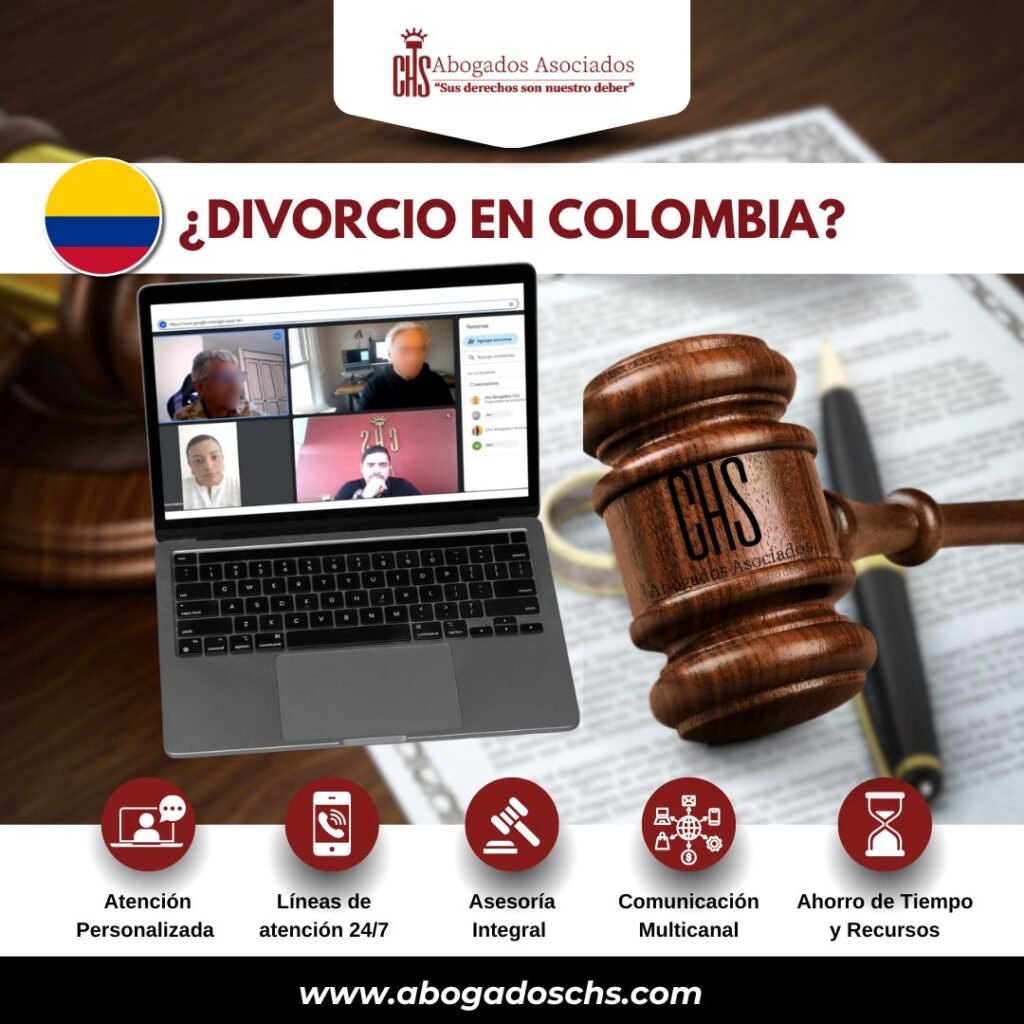

If you are Colombian or an heir to assets in Colombia but live abroad, you may be wondering: Can I process an estate succession without traveling to Colombia?
The answer is yes. In Colombia, you can carry out an estate succession process from abroad, without having to travel, provided you have the right legal advice and meet certain legal requirements.
Here, we explain how to do it, what documents you need, and why having a trusted attorney in Colombia can make all the difference.
🏡 What is an estate succession (probate)?
It is the legal process through which the assets, rights, and obligations left by a deceased person are distributed. In Colombia, this procedure can be done:
- Through a notary, if there is mutual agreement among the heirs.
- Through a court, if there is a dispute or if minors are involved.
Both proceedings can be managed remotely, through a legal representative.
🌍 Who can process an estate succession from abroad?
Any heir or interested party (spouse, children, parents, etc.) with rights to the estate in Colombia, even if they live in countries such as the United States, Spain, or elsewhere.
All that is needed is to:
- Appoint an attorney in Colombia to represent you.
- Send a properly authenticated power of attorney
📋 Requirements to start an estate succession from abroad
Below are the basic requirements for your attorney to initiate the process from Colombia:
1. Special Power of Attorney
You must grant a notarial or consular power of attorney addressed to your attorney in Colombia. This must be:
- Signed before the Colombian consulate.
2. Civil Death Certificate
It must be Colombian or valid in Colombia (if the person passed away outside the country, the death must be registered at the consulate).
3. Heir's Civil Birth or Marriage Certificate
To prove the legal relationship with the deceased (for example: child, spouse, parent).
4. Copy of the deceased's ID (cédula)
And, if possible, copies of the heirs' IDs as well.
5. Property Title Search Certificates (Certificados de Tradición y Libertad)
These are the documents proving that the deceased owned the real estate properties (houses, land lots, apartments).
6. Inventory of Assets
An estimated list of the deceased's assets and debts.
⚖️ Through a notary or through a court?
It depends on the case:
| Notary | Court |
|---|---|
| If there is agreement among heirs | If there are minors involved or disputes |
| Faster procedure | Longer procedure |
| Lower costs | May involve higher expenses |
| Signed before a notary | Handled through judicial proceedings |
📌 What happens if one of the heirs is also abroad?
Each heir can grant their own power of attorney from the country where they live. It is not necessary for everyone to be in the same location, but they must have legal representation in Colombia.
⏱️ How long does an estate succession take from abroad?
- Through a notary: between 2 and 3 months if all documents are ready and there is mutual agreement.
- Through a court: it may take longer (several months), depending on court congestion.
📬 What happens once the process is completed?
Your attorney can:
- Deliver the public deed of asset allocation (escritura pública de adjudicación).
- Register the properties in your name.
- Manage the sale or administration of the assets if you wish.
- Send an authenticated copy to your country via courier.
🤝 At CHS Abogados Asociados…
At CHS Abogados Asociados, we are dedicated to helping Colombians who need to handle legal processes and procedures remotely, without travel, unnecessary expenses, and with reliable service.
If you are abroad and need to carry out an estate succession process in Colombia, we will guide you through the entire process. In us, you will find a strategic ally, with experience, ethics, and commitment to your loved ones, no matter where in the world you are located.